Definition
IMEI stands for International Mobile Equipment Identity. In everyday language, it is a hardware identity number assigned to devices that can connect to cellular networks. Most modern phones use a 15-digit IMEI. Dual SIM and eSIM devices may show two IMEI numbers because each cellular line or radio path needs its own equipment identity.
The IMEI identifies the device equipment, not the subscriber. It is different from a phone number, SIM card number, Apple ID, Google account, carrier account or app login. A person can change the SIM card or phone number, but the IMEI remains tied to the device hardware.
How an IMEI is structured
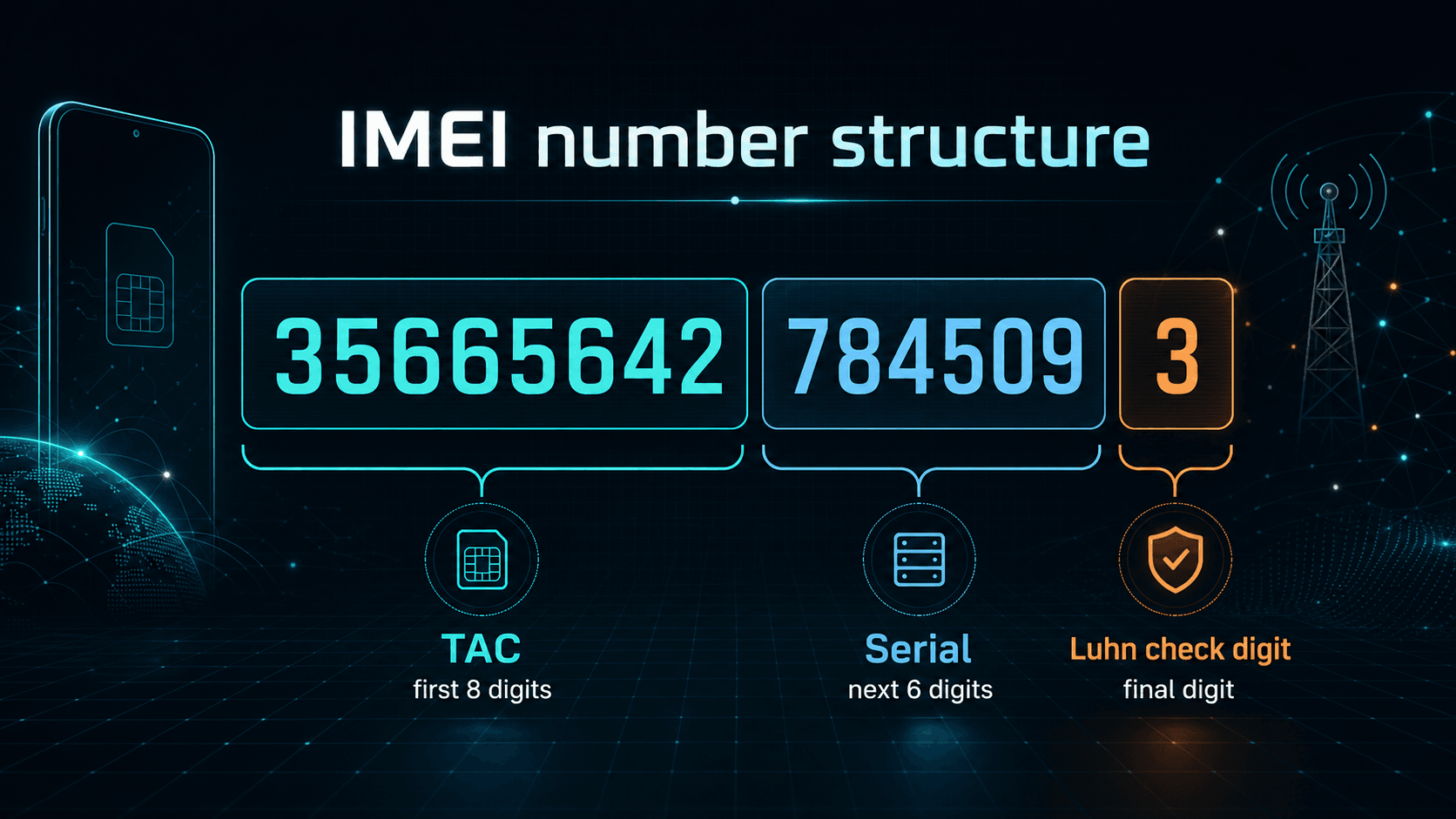
A standard IMEI is usually read as three logical parts. The first eight digits are the TAC, or Type Allocation Code, which points to a device model family. The next six digits are the serial section assigned within that model family. The last digit is a check digit calculated with the Luhn algorithm, which helps detect common typing mistakes.
| Part | Digits | Purpose |
|---|---|---|
| TAC | First 8 digits | Identifies the device type or model family registered for cellular equipment identity. |
| Serial section | Next 6 digits | Distinguishes units within the same TAC allocation. |
| Check digit | Final digit | Validates the number format using the Luhn checksum method. |
What IMEI is used for
Mobile operators, manufacturers, repair shops, insurers, resale platforms and device databases use IMEI numbers to reference cellular hardware. In practical terms, an IMEI check can help connect a 15-digit number with a readable brand, model and device context. It can also help a buyer compare what a seller claims with what the device identity indicates.
In network operations, IMEI can be used to recognize equipment type and manage access policies. In customer support, it gives agents a stable identifier for warranty, service and compatibility questions. In resale and repair, it gives both sides a shared reference point before money, parts or service decisions are involved.
Where to find an IMEI number
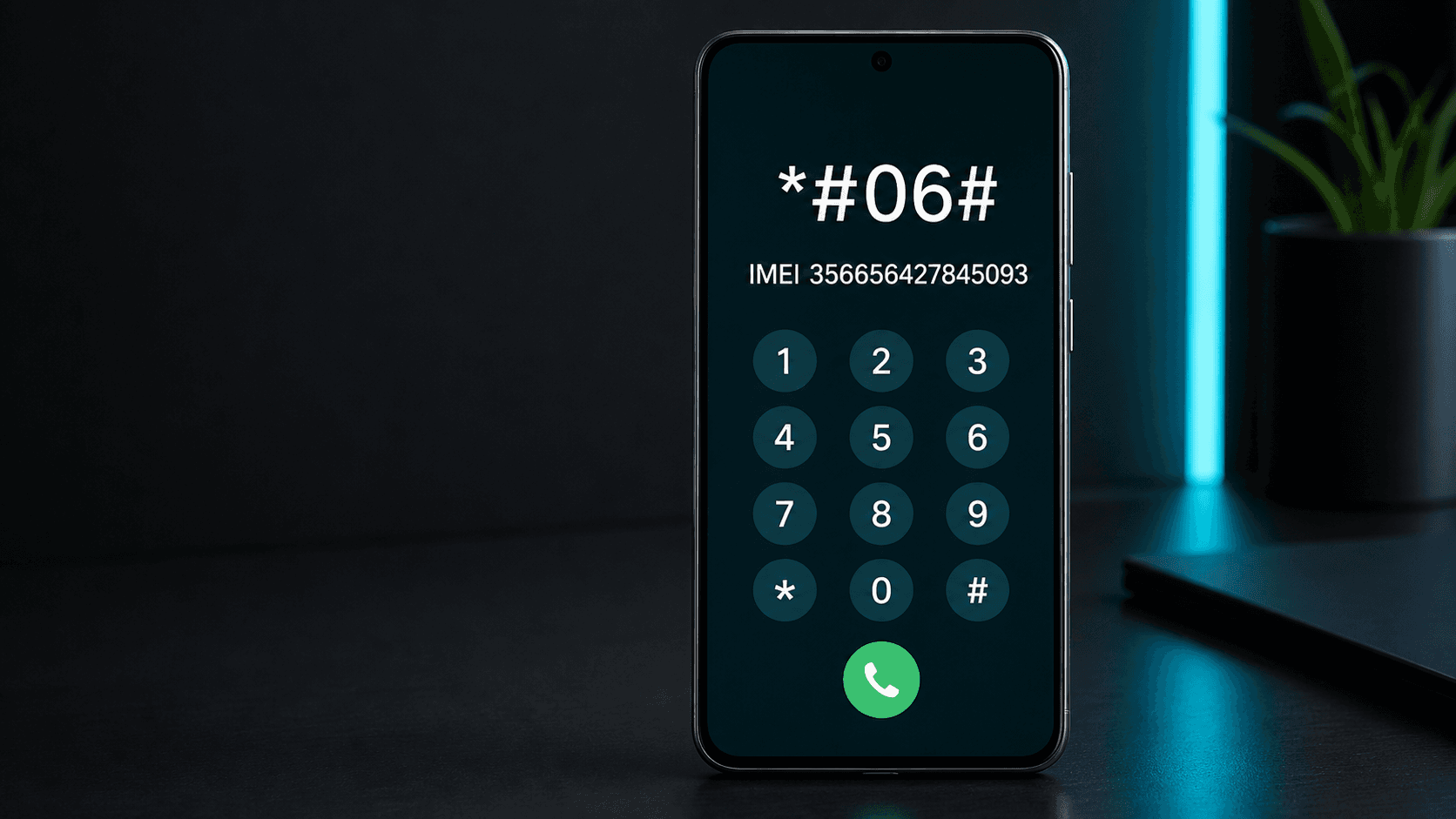
The fastest universal method is often the dial code *#06#. On many phones, entering this code in the phone app opens a screen with IMEI, IMEI2, MEID or related identifiers. You can also find IMEI in system settings, on the original retail box, on an invoice, on some SIM trays or under a removable battery on older devices.
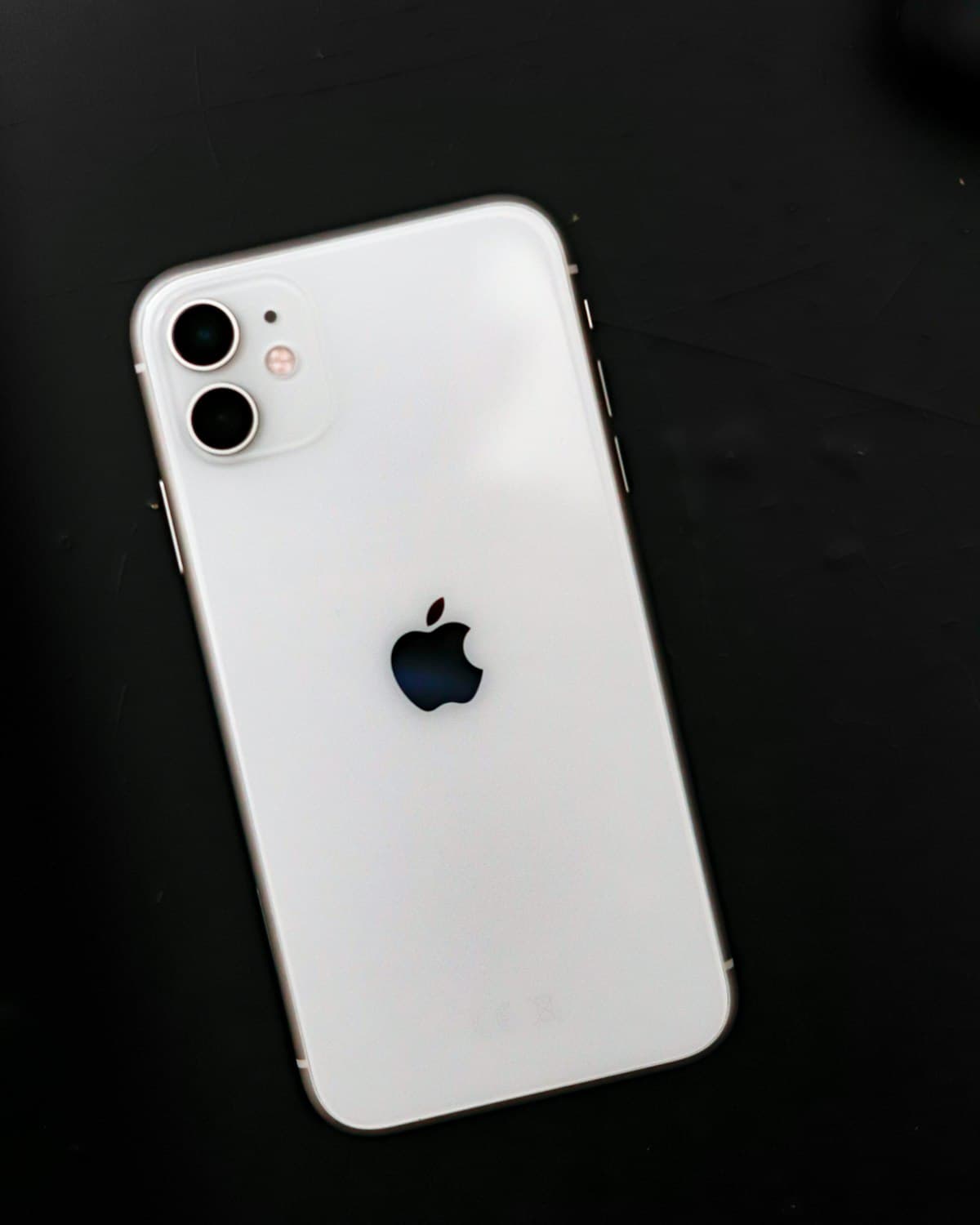
On Android, the path is usually Settings, About phone, Status or SIM status. On iPhone, use Settings, General, About. If a device has two IMEI numbers, use the one associated with the SIM slot or eSIM profile you want to check or activate.
IMEI compared with other identifiers
A mobile device can contain several identifiers, and they are easy to confuse. IMEI belongs to the cellular equipment. ICCID belongs to the SIM card. A phone number belongs to the subscriber line. A serial number is a manufacturer identifier that may be used for warranty or inventory. MEID and ESN are older or related device identifiers historically associated with CDMA networks.
| Identifier | Identifies | Common use |
|---|---|---|
| IMEI | Cellular equipment | Device lookup, carrier support, resale checks, repair intake. |
| ICCID | SIM card | SIM activation, carrier account and line provisioning. |
| Phone number | Subscriber line | Calling, messaging and service billing. |
| Serial number | Manufacturer record | Warranty, repair, inventory and device registration. |
Privacy and safety
An IMEI is not a password, but it should still be handled carefully. It can be useful for verification, yet it is also a device identifier. Avoid posting IMEI numbers publicly in marketplace listings, forum posts or screenshots. Share it only with trusted buyers, carriers, repair providers, insurers or tools that have a clear reason to process it.
When buying a used phone, compare the IMEI result with the settings screen, box, invoice and seller description. A matching IMEI does not replace a physical inspection, account-lock review, carrier-lock check or receipt review, but it gives you a stronger starting point than relying on a listing title alone.
Summary
IMEI is a global equipment identity number for cellular devices. It helps connect a physical device with model information, service workflows and network records. Understanding IMEI makes it easier to buy used phones, prepare a repair, activate a cellular line, read a device report and separate hardware identity from SIM or account identity.